Piles (Hemorrhoids): Causes, Symptoms, Types & Best Treatment Options
Piles are far more common than most people realise — and far more treatable than the silence around them suggests. Because the symptoms are personal and a little embarrassing, many people in and around Pune suffer for months or even years before seeking help, relying on creams and home remedies that only bring temporary relief. The truth is that piles are a routine medical condition, and with modern laser treatment, most cases can be resolved quickly, almost painlessly, and with same-day discharge. This guide from Shreeyash Hospital explains what piles are, why they happen, the warning signs, and the treatment options available to you.
What are piles (hemorrhoids)?
Piles, medically known as hemorrhoids, are swollen and enlarged blood vessels in and around the anus and lower rectum. A certain amount of this cushiony tissue is normal — it helps control bowel movements — but when the vessels come under repeated pressure or strain, they swell, bleed, and cause discomfort. Piles are extremely common in India, particularly among adults under 40, largely because of sedentary routines, low-fibre diets, and prolonged sitting.
Types of piles
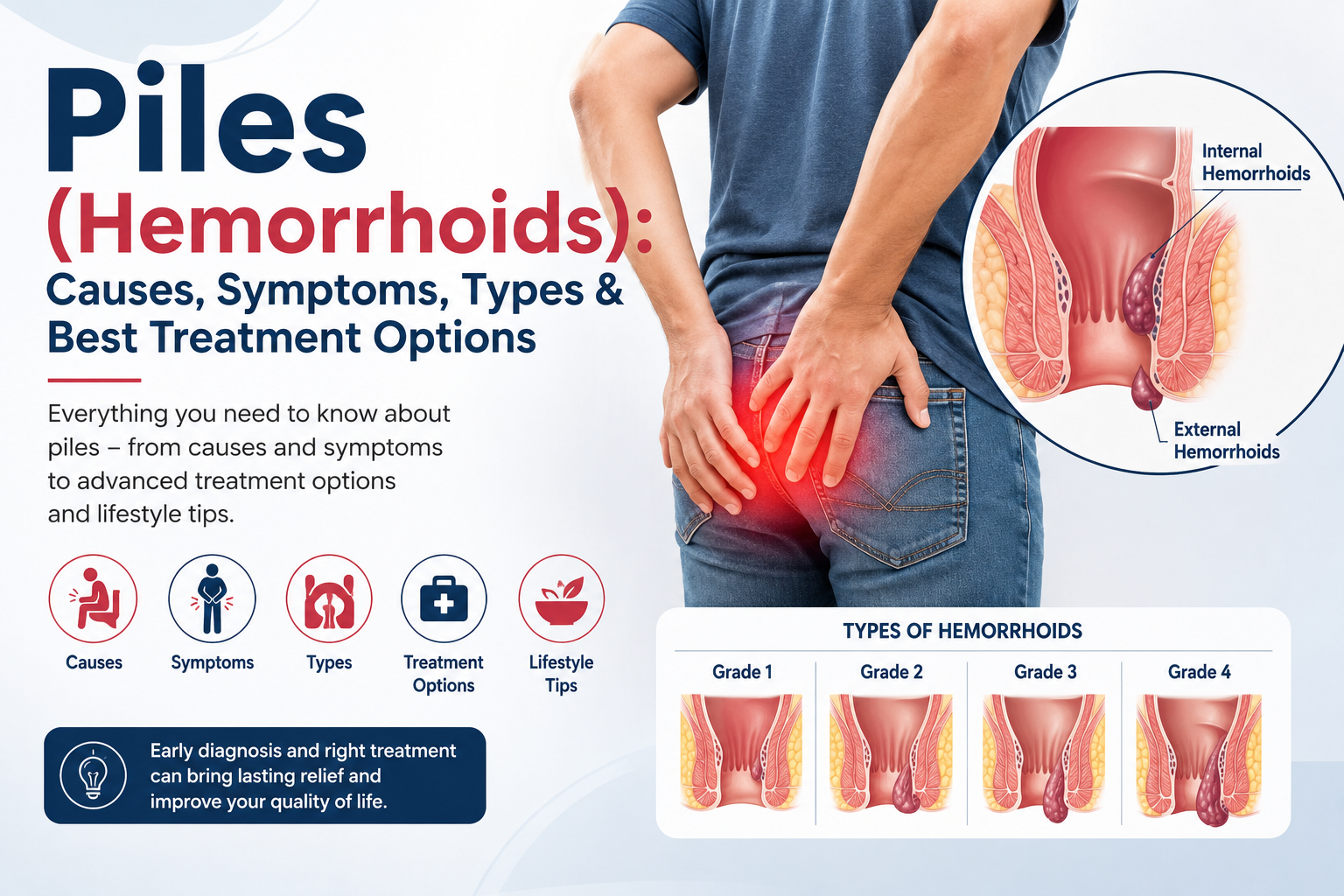
Piles are broadly classified by where they form. Internal piles develop inside the rectum and are usually painless but tend to bleed. External piles form under the skin around the anus and can be itchy and painful, especially if a clot forms (a thrombosed pile). When internal piles enlarge and bulge outside the anus, they are described as prolapsed.
Doctors also grade internal piles by severity, which helps decide treatment:
Grade 1 — small swellings inside, do not come out; usually managed with lifestyle changes
Grade 2 — come out during a bowel movement but return on their own
Grade 3 — come out and need to be pushed back in manually
Grade 4 — remain permanently outside and cannot be pushed back
Grade 1 and 2 piles often respond to conservative care, while Grade 3 and 4 usually need a procedure.
Common symptoms of piles
The symptoms vary with the type and grade, but the most frequent include:
Bright red bleeding during or after passing stools (often noticed on the toilet paper or in the bowl)
Itching, irritation, or a burning sensation around the anus
Pain or discomfort, particularly with external or thrombosed piles
A lump or swelling around the anus that may feel tender
Mucus discharge or a feeling that the bowel hasn’t emptied completely
What causes piles?
Piles develop when there is repeated pressure on the veins around the anus and rectum. Common contributing factors include chronic constipation and straining during bowel movements, a low-fibre diet, prolonged sitting (including long periods on the toilet or at a desk), obesity, pregnancy, heavy lifting, ageing, and a family tendency. In short, modern lifestyle and diet are the biggest culprits.
When should you see a doctor?
While piles are common, rectal bleeding should never simply be assumed to be piles. It’s important to have any bleeding properly evaluated, because similar symptoms can also be caused by anal fissures, fistulas, or — though far less commonly — more serious conditions. You should see a doctor if you notice persistent bleeding, a lump that won’t settle, ongoing pain, or symptoms that don’t improve within a week of home care. Please seek prompt care for heavy bleeding, severe pain, or any dizziness.
How are piles diagnosed?
Diagnosis is quick and straightforward. At Shreeyash Hospital, our surgeon takes a brief history and performs a gentle physical examination. In some cases a proctoscopy (a short look inside the anal canal with a small instrument) is done to assess internal piles and rule out other causes of bleeding. The examination is brief and handled with full privacy and sensitivity.
Treatment options for piles
Treatment depends on the grade and severity, and always starts with the least invasive option that will work.
Conservative management suits early-stage piles: a high-fibre diet, plenty of water, warm sitz baths, stool softeners, and prescribed creams or ointments to ease symptoms and reduce straining.
Non-surgical procedures such as rubber band ligation or sclerotherapy can treat some internal piles in an outpatient setting.
Surgery is recommended for larger, prolapsed, or persistent piles that don’t respond to other measures — and today, this most often means laser treatment.
Laser treatment for piles: a painless, day-care solution
Laser surgery has transformed how piles are treated. Instead of cutting, a fine laser fibre is used to seal off the blood supply to the pile, causing it to shrink and resolve over the following weeks. The advantages over conventional surgery are significant: no cuts or stitches, minimal bleeding, far less pain, a lower risk of infection, and a much faster recovery. The procedure itself usually takes around 20–30 minutes, is performed as a day-care procedure with same-day discharge, and most patients return to their normal routine within a few days. Because the technique preserves the surrounding muscle, the risk of long-term complications is low.
Piles surgery cost
The cost of laser piles surgery in India generally ranges from around ₹40,000 to ₹90,000, depending on the grade of the piles, the technique used, and the hospital. The good news is that piles surgery is typically covered by most health insurance policies. Our team can help you understand the expected cost and assist with insurance and cashless facilities.
How to prevent piles
Many cases can be prevented — or kept from returning — with simple habits: eat plenty of fibre (fruits, vegetables, whole grains), drink enough water, avoid straining and don’t sit on the toilet for long periods, stay physically active, and don’t delay the urge to pass stools. Maintaining a healthy weight also helps considerably.
Expert piles treatment at Shreeyash Hospital, Sinhagad Road
You don’t have to live with the discomfort or the embarrassment. Shreeyash Hospital in Kirkatwadi offers advanced laser piles and anorectal treatment with experienced surgeons, complete privacy, and compassionate care — conveniently located for patients across Kirkatwadi, Narhe, Dhayari, Ambegaon and the wider Sinhagad Road area.
Yes. With the right treatment — especially laser surgery for advanced piles — most cases are resolved effectively, and maintaining good bowel habits keeps the risk of recurrence low.
Laser treatment is minimally invasive with no cuts or stitches, so pain is much less than with conventional surgery. Most patients experience only mild discomfort and recover quickly.
No. Early-stage (Grade 1–2) piles often improve with diet, lifestyle changes, and medication. Surgery is mainly recommended for larger, prolapsed, or persistent piles.
Bleeding from piles is common but should always be checked by a doctor, as similar bleeding can have other causes. Persistent or heavy bleeding needs prompt evaluation.
Most patients go home the same day and return to normal activities within a few days, with the piles shrinking over a few weeks.
Piles are swollen blood vessels, a fissure is a small tear in the anal lining, and a fistula is an abnormal tract near the anus. They share some symptoms, so a proper examination is important.
Yes, piles surgery is generally covered by most health insurance policies. Our team can help with the paperwork and cashless facilities.
Recurrence is uncommon after laser treatment, especially if you maintain a high-fibre diet, stay hydrated, and avoid straining.