Shreeyash Hospital | Best Multispeciality Hospital in Kirkatwadi, Sinhagad Road, Pune
📍
Kirkatwadi, Pune-411024
📞
For Appointment: +91 8237779310
✉️
info@shreeyashhospital.com
⏰
24/7 Available
- Uncategorized
- August 27, 2026
- 6 MINS READ
How to Recognize the Early Signs of a Stroke and Why Every Minute Matters
A stroke is a serious medical emergency that occurs when the blood supply to part of the brain is interrupted or when a blood vessel in the brain ruptures. Without an adequate supply of oxygen and nutrients, brain cells begin to die within minutes. This is why recognizing the early signs of a stroke and seeking immediate medical attention is critical. Quick diagnosis and prompt treatment can reduce brain damage, improve recovery, and significantly increase the chances of survival.
Stroke is one of the leading causes of disability and death worldwide, but many people are unaware of its warning signs. Understanding the symptoms and acting without delay can make a life-changing difference for the person experiencing a stroke.
What Is a Stroke?
A stroke occurs when the brain does not receive enough blood to function normally. There are two main types of stroke. An ischemic stroke, which is the most common type, happens when a blood clot blocks an artery supplying blood to the brain. A hemorrhagic stroke occurs when a weakened blood vessel ruptures, causing bleeding inside or around the brain. Both conditions require immediate medical care because delayed treatment can lead to permanent brain damage or even death.
Why Is It Important to Recognize the Early Signs of a Stroke?
The brain controls movement, speech, memory, vision, and many other essential body functions. During a stroke, millions of brain cells can be damaged every minute that blood flow is interrupted. This damage may affect the ability to speak, walk, think, or perform daily activities independently.
Recognizing the early signs of a stroke allows doctors to begin treatment as quickly as possible. Certain treatments, such as clot-dissolving medication for ischemic stroke, are most effective when given within a specific time window after symptoms begin. Seeking emergency medical care immediately can improve recovery and reduce the risk of long-term disability.
What Are the Early Signs of a Stroke?
The symptoms of a stroke usually appear suddenly and may vary depending on the area of the brain affected. One of the most common warning signs is sudden weakness or numbness on one side of the face, arm, or leg. A person may have difficulty lifting one arm or may notice that one side of the face droops when attempting to smile.
Another important sign is sudden difficulty speaking or understanding speech. The person may slur their words, speak unclearly, or appear confused during a conversation. Sudden vision problems, such as blurred vision, double vision, or loss of vision in one or both eyes, are also possible symptoms.
Some people experience sudden dizziness, loss of balance, difficulty walking, or poor coordination. A severe headache that comes on suddenly, especially if it is unlike any previous headache and is accompanied by vomiting or altered consciousness, may indicate a hemorrhagic stroke and requires immediate medical attention.
Because stroke symptoms often appear without warning, it is important not to ignore even mild or temporary symptoms.
How Does the FAST Test Help Identify a Stroke?
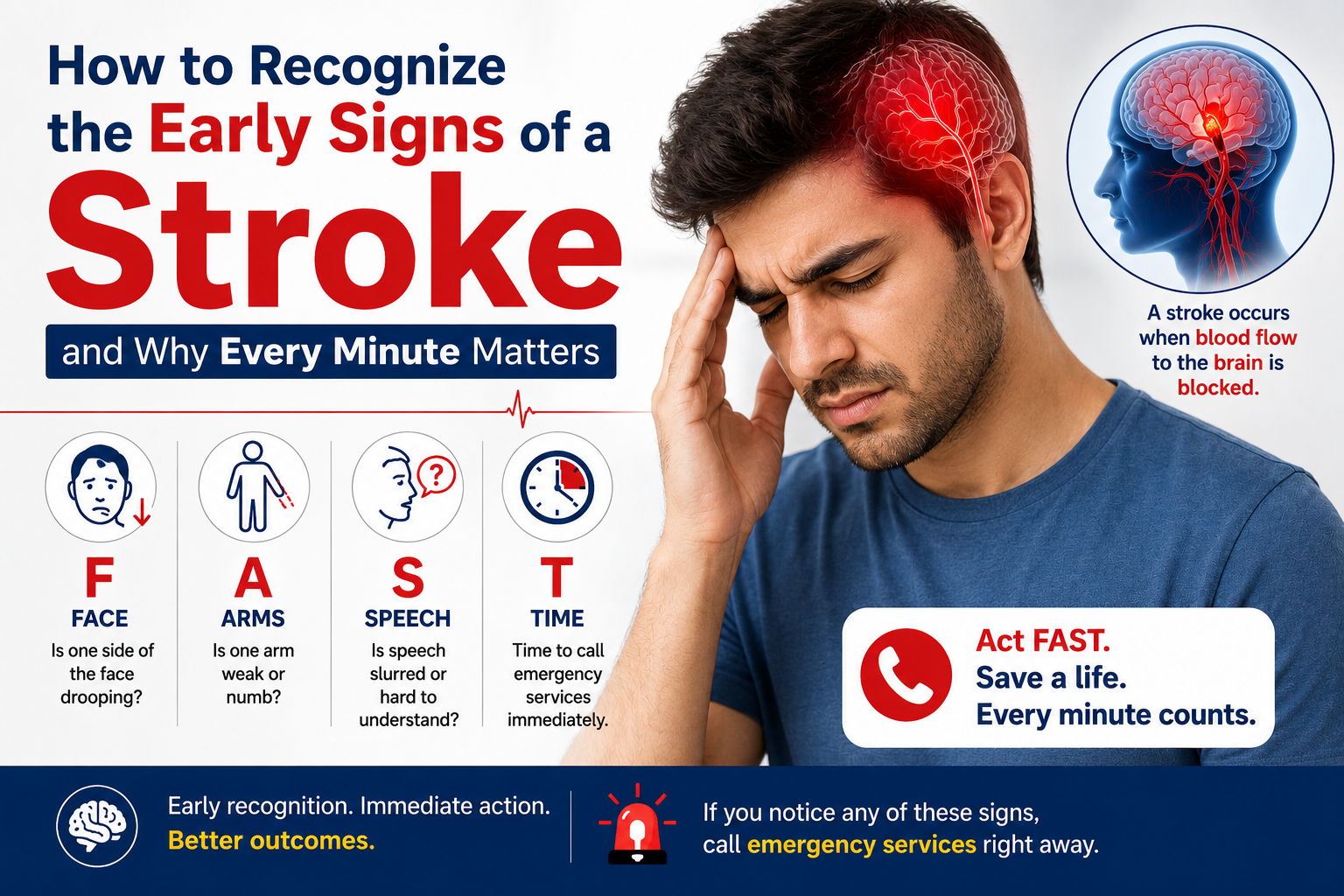
The FAST test is a simple and effective way to recognize the warning signs of a stroke quickly.
F stands for Face. Ask the person to smile and check if one side of the face droops.
A stands for Arms. Ask the person to raise both arms and observe whether one arm drifts downward or cannot be lifted.
S stands for Speech. Ask the person to repeat a simple sentence and listen for slurred or unusual speech.
T stands for Time. If any of these signs are present, seek emergency medical care immediately. Every minute counts because early treatment can save brain cells and improve the chances of recovery.
What Causes a Stroke?
Several medical conditions and lifestyle factors can increase the risk of stroke. High blood pressure is the leading risk factor because it can damage blood vessels over time. Diabetes, high cholesterol, heart disease, obesity, smoking, excessive alcohol consumption, and physical inactivity also increase the likelihood of developing a stroke.
Age is another important factor, as the risk generally increases with advancing age. However, strokes can occur in younger adults and even children. A family history of stroke and certain inherited medical conditions may also contribute to an individual’s risk.
How Is a Stroke Treated?
Stroke treatment depends on whether the stroke is ischemic or hemorrhagic. For an ischemic stroke, doctors may administer clot-dissolving medication if the patient arrives within the recommended treatment window and meets the eligibility criteria. In some cases, a minimally invasive procedure called mechanical thrombectomy is performed to remove the clot from a large artery.
For hemorrhagic stroke, treatment focuses on controlling bleeding, reducing pressure inside the brain, and stabilizing the patient’s condition. Surgery may be necessary in certain situations to repair damaged blood vessels or relieve pressure.
Following emergency treatment, rehabilitation plays an important role in recovery. Physical therapy, occupational therapy, speech therapy, and psychological support help many stroke survivors regain independence and improve their quality of life.
The most common early warning signs include sudden facial drooping, weakness or numbness on one side of the body, difficulty speaking, sudden vision problems, dizziness, loss of balance, and a severe headache.
Brain cells begin to die within minutes when blood flow is interrupted. Early treatment can reduce brain damage, improve recovery, and increase survival.
FAST stands for Face drooping, Arm weakness, Speech difficulty, and Time to call emergency medical services. It is a simple way to recognize a stroke quickly.
Yes. Although strokes are more common in older adults, they can also occur in younger people due to conditions such as high blood pressure, heart disease, clotting disorders, or certain lifestyle factors.
Many strokes can be prevented by controlling blood pressure, managing diabetes and cholesterol, exercising regularly, eating a healthy diet, avoiding smoking, limiting alcohol consumption, and attending regular health checkups.
Early signs include facial drooping, arm weakness, slurred speech, sudden confusion, vision changes, dizziness, loss of balance, and a severe headache.
Seek emergency medical help immediately. Do not wait for symptoms to improve, as rapid treatment can save brain tissue and improve recovery.
FAST stands for Face, Arms, Speech, and Time. It helps people recognize the most common warning signs of a stroke and respond quickly.
Some symptoms may temporarily disappear during a transient ischemic attack (TIA), but this still requires immediate medical evaluation because it can be a warning sign of a major stroke.
People with high blood pressure, diabetes, high cholesterol, heart disease, obesity, atrial fibrillation, a history of stroke, or unhealthy lifestyle habits have a higher risk of experiencing a stroke.