Shreeyash Hospital | Best Multispeciality Hospital in Kirkatwadi, Sinhagad Road, Pune
📍
Kirkatwadi, Pune-411024
📞
For Appointment: +91 8237779310
✉️
info@shreeyashhospital.com
⏰
24/7 Available

- Clinical Health
- November 20, 2026
- 13 MINS READ
This lump will not clear up on its own and can suddenly become an emergency.
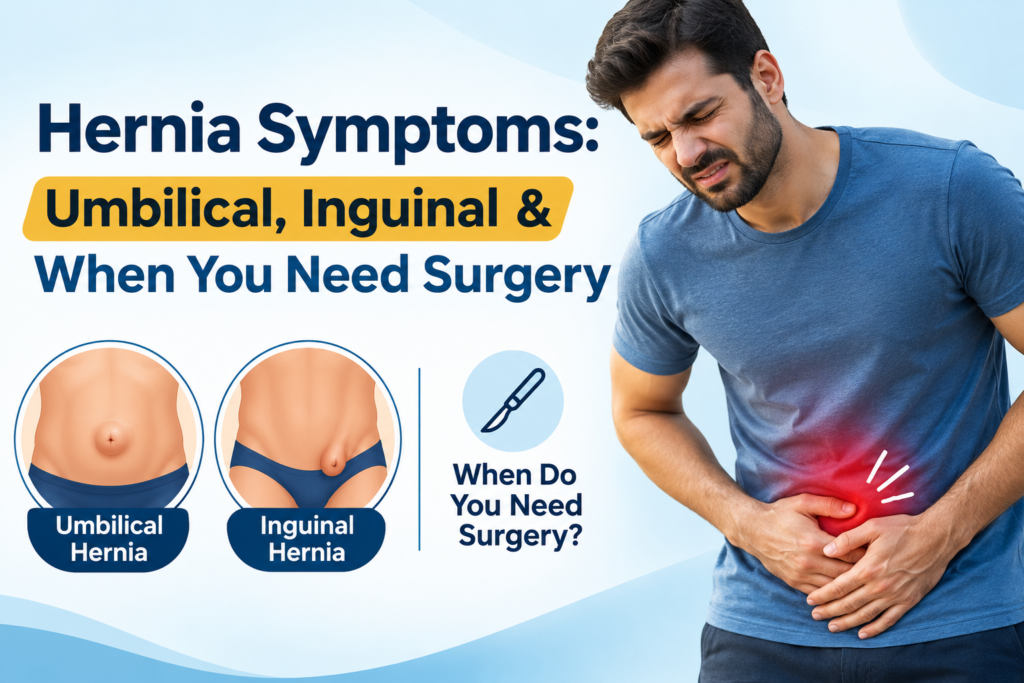
Many people ignore the lump for months, or even years as it can appear when coughing or lifting something heavy or straining in the bathroom and then disappear when lying down.
Understanding the early symptoms of hernias can help you deal with them at your own pace. This guide explains what symptoms to look out for with umbilical and inguinal hernias. We will also explain the warning signs and how long your recovery may take from laparoscopic hernia surgery.
What is a Hernia?
A hernia occurs when there is a weakness or tear in the muscular wall of your abdomen allowing part of your intestines or fatty tissue to poke through creating a lump.
A hernia will not clear up by resting, exercising, wearing a belt or trying home remedies. The muscle weakness will not improve on its own and the tear will usually slowly get bigger. The only definitive treatment is surgery.
Common Symptoms
The most common symptom of a hernia is a visible or palpable lump.
The lump will appear when standing up, coughing, sneezing, lifting or straining. The lump will often disappear or flatten when lying down. In the early stages the lump can be gently pushed back in.
It can cause discomfort in the area of the lump. You might feel a dull ache, tugging or pulling.
A burning or aching sensation in the area of the lump. Often this will be felt more when bending, lifting or standing for long periods.
Pain when lifting, coughing or straining. This can often affect your bowels or bladder.
Feeling a heaviness or dragging sensation in the groin. In males the hernia can sometimes cause swelling in the scrotum.
Not everyone will experience all of these symptoms. Some small hernias will not cause any pain and are often only picked up during a routine check.
Umbilical Hernia Symptoms & Causes
Umbilical Hernia in Adults
The first symptom in adults will be feeling a soft lump in or around the navel. This can become more visible when coughing, laughing, straining or standing. You may feel a dull ache or pulling. Over time the lump will usually get bigger. Your navel may appear to be pooched or stretched.
Causes
Anything that causes increased pressure to your abdominal wall can cause an umbilical hernia. This can include pregnancy (particularly multiple pregnancies), obesity, heavy lifting, chronic coughing, constipation, ascites (fluid in your abdomen) and previous abdominal surgery. It is common in females after childbirth and those who have put on lots of weight.
In babies you may notice a soft lump in the navel. This is often more noticeable when crying. In most children the hernia will close by itself between the ages of 2-5. If it hasn’t closed or is large you may be advised to have it fixed by a paediatric surgeon. If y
Inguinal Hernia Symptoms & Causes
An inguinal hernia is the most common type of hernia. It occurs in the groin area (where your thigh meets your lower abdomen). This is much more common in males.
Symptoms
The main symptom you will notice is a lump in one or both sides of your groin. It will often become more noticeable when standing, coughing or lifting. Males may feel pain or swelling in their testicle. Many patients report feeling a dragging sensation, a heavy feeling in your groin or a burning ache. Particularly if you have been on your feet for a long time.
Causes
This can be caused by a natural weakness in your groin area. Straining when passing urine or going to the toilet, chronic coughing, heavy lifting, smoking (weakens tissue) and ageing. Having a family history of hernias can also increase your risk.
Other Types of Hernia
Not all hernias occur in the navel or groin area. Incisional hernias occur where you previously had surgery. This is often after abdominal or caesarean section surgery. Femoral hernias occur just below your groin crease. These are more common in females. Hiatus hernias occur internally where part of your stomach pushes up through your diaphragm. This is usually associated with heartburn rather than a visible lump. Epigastric hernias occur in the upper middle part of your abdomen between your breastbone and navel.
Warning Signs
Most hernias are not an emergency. However, they can become stuck (incarcerated) or lose their blood supply (strangulated). If you notice any of the following symptoms you should go to the emergency department straight away.
The lump becomes firm, painful and cannot be pushed back in. You experience sudden severe pain or increasing pain. The skin over the lump becomes red, purple or dark. You experience nausea, vomiting or a temperature. You’re unable to open your bowels or pass wind. Your abdomen becomes distended and tense.
This can indicate that part of your intestines have become stuck and are not receiving any blood supply. This will require emergency surgery. Delaying can cause serious complications. Don’t try to wait it out.
When Should I Have Hernia Surgery?
As hernias will not heal on their own, hernia surgery is the definitive treatment. However, you may not need it straight away.
Surgery is usually recommended if you are experiencing pain or discomfort, your hernia is increasing in size, affecting your work or daily life, you have experienced an episode or if you have a femoral hernia (higher risk of complications). If your hernia becomes obstructed or strangulated you will require an emergency operation.
If you have a small painless hernia, particularly if you are elderly or have other serious health issues your surgeon may recommend monitoring. This should always be decided based on an examination. However, you must also be aware that your hernia could increase in size and your surgery may become more complicated.
Types of Hernia Surgery
There are two main types of hernia surgery.
Open surgery – This requires one incision directly over your hernia. The tissue is then pushed back into place and the wall strengthened. This is commonly done using mesh.
Laparoscopic Surgery – This uses a few small incisions. A camera and fine instruments are used to complete the surgery. The surgeon will be able to view the weak area on a screen and strengthen it using mesh. As the muscles aren’t disturbed as much patients usually experience less pain, smaller scars and are able to return to normal sooner. Laparoscopic surgery is particularly beneficial if you have bilateral hernias as both can often be fixed in the same session.
The type of surgery you have will depend on the type and size of your hernia, if you’ve had any previous surgery, your general health and your surgeon’s opinion. Not everyone will be suitable for laparoscopic surgery and a good surgeon will be able to explain why.
Laparoscopic Hernia Surgery Recovery Time
aparoscopic hernia surgery. This is usually quicker than open surgery. Everyone heals at different rates so this is just a general guideline. Always follow your own surgeon’s advice.
First 24-48 Hours
Most patients will be able to go home within a day or two of laparoscopic hernia surgery. You may feel some soreness from the incisions, mild bloating or some discomfort in your shoulders from the gas used. Pain can usually be controlled with simple medications. You should start to walk short distances the same day or next day as this helps your recovery.
Week 1
You will usually be back to doing light daily activities within a few days. This can include walking, eating normally and having a comfortable toilet. Keep your wounds clean and dry. Don’t lift anything heavy or strain.
Weeks 1-2
Many patients will be able to return to work if they have a desk based job within 1-2 weeks. You may feel some fatigue and some tugging around your wound.
Weeks 2-4
You will be back to most of your usual activities. You will be able to drive if you can brake suddenly without any pain and you are no longer on any pain medication that makes you sleepy.
Weeks 4-6
If you have a job that involves heavy lifting, farming or intense exercise your surgeon will usually advise you to wait 4-6 weeks (or longer if you have a large or complicated hernia) before returning to full strength. One of the most common reasons hernias recur is returning too soon.
Umbilical Hernia
Often an umbilical hernia will be a quick procedure and many patients will feel back to normal within 1-2 weeks. However, if your hernia is large or has mesh it may take longer to feel completely comfortable.
Factors that can slow down your recovery:
Smoking, diabetes (not controlled), obesity, chronic coughing, constipation and not sticking to activity restrictions.
Contact your surgeon if you develop a temperature, increasing redness or discharge from your wounds, severe or increasing pain, frequent vomiting or a new lump at the site of your surgery.
Tips
Walk everyday. Eat foods high in fibre and drink plenty of water so you don’t strain when going to the toilet. Place a pillow over your wound when coughing or sneezing. Don’t lift heavy objects until your surgeon says it’s ok. Take your medication as prescribed and attend all follow ups. If your surgeon advises it gentle physio can help you regain your core strength safely.
Prevention
Whilst you can’t always prevent hernias, there are ways to reduce your risk. Keep a healthy weight, lift with your legs not your back, treat chronic coughing and constipation early, stop smoking and strengthen your core muscles with doctor approved exercise. If you have previously had abdominal surgery don’t lift heavy objects whilst healing. Women who are pregnant or planning to be can speak to their gynaecologist about looking after their abdominal wall.
Treatment at Shreeyash Hospital, Kirkatwadi, Pune
Our general and laparoscopic surgeons at Shreeyash Multispeciality Hospital, Sinhagad Road provide minimally invasive treatment for hernias and other abdominal issues. If you have noticed a lump, constant ache or any of the symptoms listed above we can examine you to see if you need treatment or can monitor it safely.
Patients from Kirkatwadi, Narhe, Dhayari, Ambegaon and surrounding areas can also visit our clinic in Nanded City. If you have sudden severe pain, a hard lump that won’t go back in, vomiting or temperature please contact our 24/7 emergency care.
Frequently Asked Questions About Hernia
Find answers to common questions about hernia symptoms, treatment, surgery, recovery and daily activities.
What are the first symptoms of a hernia?
The first noticeable symptom of a hernia is often a soft bulge in the groin, around the navel or near a previous surgical incision. It may become more visible when coughing, straining or lifting and may reduce when lying down. Some people also experience a dull ache, pressure or pulling sensation in the affected area.
Can umbilical hernias go away?
Many umbilical hernias in babies close naturally by the age of 4 to 5 years. However, umbilical hernias in adults generally do not close on their own and may gradually increase in size. A doctor can assess the hernia and advise whether monitoring or surgical repair is appropriate.
Are umbilical hernias dangerous?
Some small umbilical hernias may cause little or no discomfort. However, a hernia can become incarcerated (trapped) or strangulated, which may cut off the blood supply to the trapped tissue. Sudden severe pain, vomiting, abdominal swelling or a bulge that becomes hard, tender or cannot be pushed back requires immediate medical attention. Adult umbilical hernias may need surgical repair depending on their size, symptoms and risk factors.
What is the difference between an inguinal and umbilical hernia?
An inguinal hernia develops in the groin area when tissue pushes through a weak spot in the lower abdominal wall. It is more common in men. An umbilical hernia develops around the belly button (navel) and can occur in babies and adults. In adults, factors such as pregnancy, obesity and increased abdominal pressure may contribute to its development.
How long will I be off work after laparoscopic hernia surgery?
Recovery time depends on the type of hernia, surgical procedure and individual healing. Many patients can return to light daily activities within a few days. People with desk-based jobs may be able to return to work within 1 to 2 weeks, while physically demanding jobs may require more time. Heavy lifting and strenuous exercise are generally restricted for around 4 to 6 weeks or as advised by the surgeon.
Can I do exercise or yoga if I have a hernia?
Some gentle activities may be suitable, but heavy lifting, intense abdominal exercises and movements that increase abdominal pressure can worsen discomfort. It is advisable to have the hernia evaluated by a doctor before starting or continuing strenuous exercise or yoga. Your doctor can guide you on activities that are appropriate for your condition.
Can hernias come back after surgery?
Yes, a hernia can recur even after surgical repair, although recurrence is not inevitable. The risk may depend on the type of hernia, surgical technique, wound healing, smoking, obesity and other health factors. Following your surgeon's instructions about activity restrictions, wound care and recovery can help reduce complications and support healing.
Do all hernias need surgery?
Not every hernia requires immediate surgery. In selected patients with small, painless and uncomplicated hernias, a doctor may recommend watchful waiting with regular monitoring. However, painful, enlarging or symptomatic hernias may require surgical repair. An incarcerated or strangulated hernia needs urgent medical assessment and may require emergency surgery.