Shreeyash Hospital | Best Multispeciality Hospital in Kirkatwadi, Sinhagad Road, Pune

- Uncategorized
- November 13, 2026
- 11 MINS READ
A heart attack does not always begin with severe chest pain. Sometimes it begins with what feels like a simple stomach problem.
A person may feel pressure or burning in the chest after dinner, take an antacid and wait it out. Sometimes it is really gas. Times it could be a heart attack and the hours spent waiting can damage heart muscle that can never be replaced.
Knowing the heart attack symptoms and how they differ from harmless chest discomfort can save a life. This guide explains the warning signs, the causes of chest pain, how to tell gas pain from heart pain and exactly what to do when you are unsure.
What Is a Heart Attack?
A heart attack (medically called an infarction) happens when blood flow to part of the heart muscle is suddenly blocked. In cases a clot forms on a cholesterol plaque inside a coronary artery. Without oxygen- blood the affected heart muscle starts to get damaged within minutes. The longer the blockage lasts the more muscle is lost. That is why doctors say “time is muscle.”
Heart Attack Symptoms: The Warning Signs You Should Never Ignore
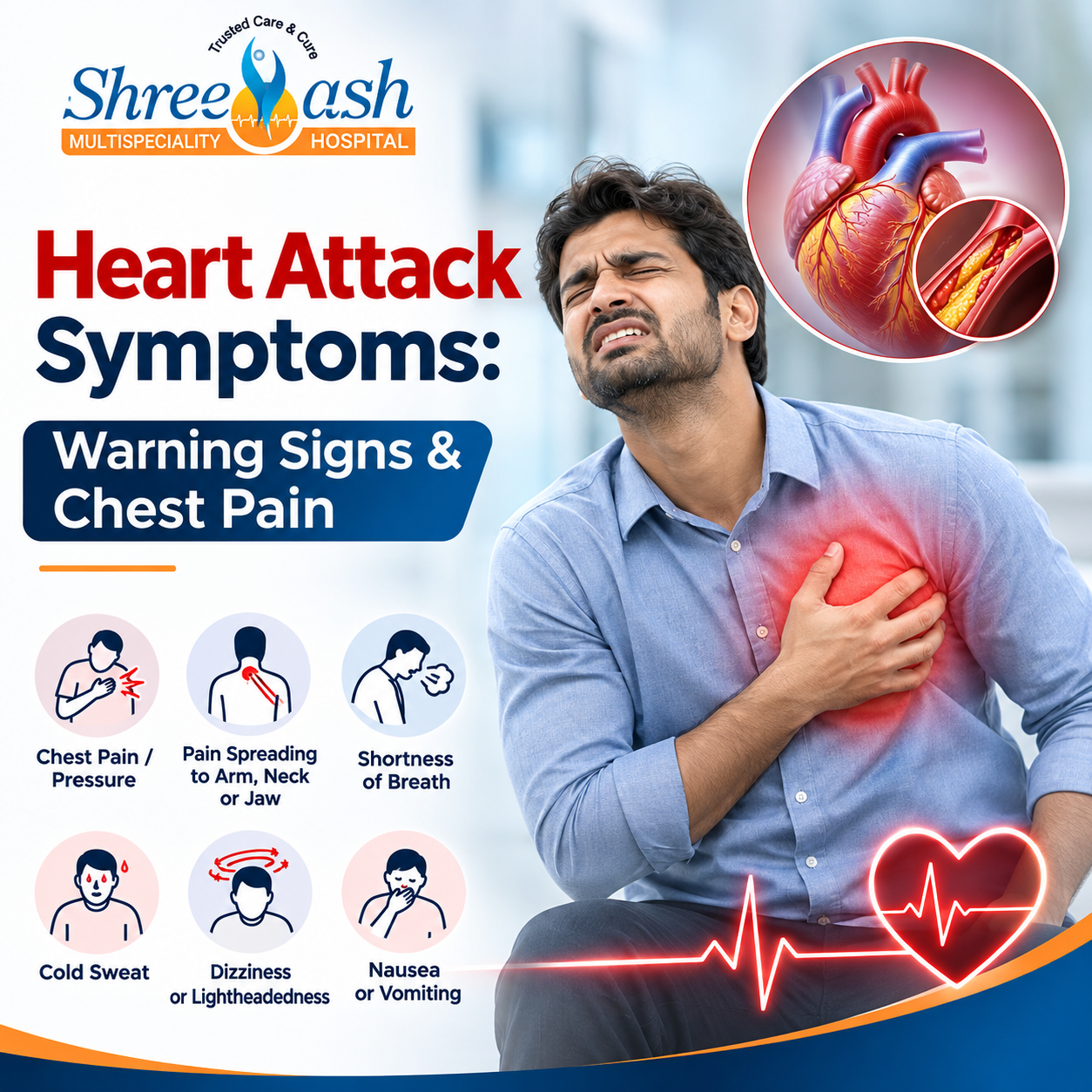
The common of all heart attack symptoms is chest discomfort.. It rarely looks like the dramatic clutch-your-chest scene shown in films. Here is what to watch for.
Chest pressure, squeezing or heaviness. Many patients say it feels like a weight sitting on the chest, a band around it or a fullness in the center. It usually lasts more than a few minutes or it goes away and comes back.
Pain that spreads.The discomfort can travel to the arm, both arms, shoulders, neck, jaw or upper back. Pain in the jaw or between the shoulder blades with no chest pain is a classic missed sign.
Shortness of breath.You may feel breathless while resting or after little effort with or without chest discomfort.
Cold sweat.Sudden clammy sweating with no reason, such as heat or exercise is a red flag.
**Nausea, vomiting or indigestion-like discomfort.** This is why heart attacks are often mistaken for acidity or gas especially when the discomfort sits in the upper abdomen.
**Dizziness, light-headedness or sudden unexplained fatigue.** Some people feel faint or extremely weak as if something is seriously wrong.
**Sense of dread.** Many patients describe a feeling of impending doom or unusual anxiety that they cannot explain.
Heart Attack Symptoms in Women, Diabetics and Older Adults
Not everyone experiences a heart attack this way. Women often report breathlessness, unusual tiredness, nausea, back or jaw pain and a milder chest discomfort. People with diabetes may have what doctors call a “heart attack” because long-standing high blood sugar can dull pain signals so the only clue may be sweating, breathlessness or sudden weakness. Older adults may also present with confusion or sudden fatigue than classic chest pain.
If you or someone in your family falls into any of these groups treat symptoms with extra seriousness.
Chest Pain Causes: Not Every Chest Pain Is a Heart Attack
Chest pain is one of the common reasons people visit a hospital and the heart is only one of several possible sources. Understanding the chest pain causes helps you to respond calmly and correctly.
Heart-related causes include a heart attack, angina (chest pain from reduced blood flow to the heart often triggered by exertion or stress) inflammation of the heart lining (pericarditis) and common problems with the aorta. These are the causes and they need urgent medical attention.
Digestive causes include acid reflux or GERD, gastritis, peptic ulcers, trapped gas and gallbladder problems. Because the food pipe and stomach sit behind and below the heart, digestive pain is often felt in the chest.
Muscle and bone causes include a chest wall muscle or inflamed rib cartilage (costochondritis). The pain is typically sharp. Gets worse when you press on the area twist or take a deep breath.
Lung causes include pneumonia, pleurisy or a blood clot, in the lung ( embolism). Pain usually worsens with breathing or coughing. May come with fever or sudden breathlessness.
Anxiety and panic attacks can cause chest tightness, a racing heartbeat and breathlessness which look a lot like an event. So a doctor should rule out the heart before anxiety is assumed to be the cause.
The point is simple: you cannot reliably diagnose the cause of chest pain at home. When in doubt, get it checked.
Gas Pain vs Heart Pain: How to Tell the Difference
This is the question patients ask us most. There is no home test but the pattern of the pain often offers clues.
What gas pain usually feels like.
Gas pain is typically sharp, stabbing or crampy. It may move around the abdomen or lower chest. It often shows up after an oily meal, a carbonated drink or when you lie down right after eating. It is usually accompanied by bloating, belching or passing gas. It commonly eases after burping, passing gas or taking an antacid. It tends to settle within minutes to an hour.
What heart pain usually feels like.
Heart pain is often a deep pressure, squeeze or heaviness in the center or left side of the chest. It does not change when you press on the chest or move your body. It is not relieved by burping or antacids. It may spread to the arm, jaw, neck or back. It tends to come with sweating, breathlessness, nausea or light‑headedness. It often appears during effort or emotional stress and may continue or return even after you rest.
The overlap problem
. Here is the part that matters most. A heart attack can cause nausea, upper abdominal discomfort and a burning sensation that feels like acidity.. Gas or reflux can sometimes cause alarming chest tightness. Because the two can overlap the safest approach is to judge the picture, not just the pain. If the discomfort comes with sweating, breathlessness, pain spreading to the arm or jaw or a sense that something is seriously wrong do not assume it is gas.
If an antacid does not help within a few minutes. The pain is getting worse treat it as an emergency.
When Should You Seek Emergency Help?
Call for emergency help immediately if you or someone near you has chest pressure or pain lasting than a few minutes pain spreading to the arm, jaw, neck or back, breathlessness cold sweats, nausea or sudden dizziness or if you simply feel that this is not normal.
Please do not wait to see if it passes and do not drive yourself to the hospital. Call an ambulance. Ask someone to take you because emergency teams can begin care on the way. If you are advised by a doctor or an emergency helpline and are not allergic to aspirin chewing an aspirin tablet while help arrives may be recommended. Do not take any medicine on your own without that guidance.
Who Is at Risk of a Heart Attack?
Your risk is higher if you have high blood pressure, diabetes, high cholesterol or a family history of heart disease if you smoke or chew tobacco if you are overweight or physically inactive or if you live with chronic stress or poor sleep. Age matters too though in India heart attacks are increasingly seen in people in their 30s and 40s. Having risk factors does not mean a heart attack is certain. It does mean chest symptoms deserve more attention in your case.
How Doctors Diagnose the Cause of Chest Pain
When you arrive at the hospital with chest pain the first step is usually an ECG (electrocardiogram) which records the hearts activity within minutes. Blood tests for markers such, as troponin help confirm whether heart muscle has been damaged. Depending on the situation a 2D Echo may be done to see how well the heart is pumping and moving. A stress test (TMT) done when clinically appropriate helps check how the heart responds to exercise and can reveal blockages that do not show up at rest.
Early diagnosis lets your doctor start the treatment at the right time whether that means medication, lifestyle changes or a procedure.
How to Lower Your Risk of a Heart Attack
The good news is that much of heart attack risk can be reduced. Eat a diet that is low in fried and processed foods and rich in vegetables, fruit and whole grains. Stay active for least 30 minutes on most days. Quit. Tobacco in every form. Keep your blood pressure, blood sugar and cholesterol under control with checks. Manage stress. Sleep well and do not skip your medicines. A yearly preventive health checkup, after age 35 or earlier if you have risk factors helps catch problems before they turn into emergencies.
Cardiac Care and 24/7 Emergency Services at Shreeyash Hospital, Kirkatwadi
At Shreeyash Multispeciality Hospital on Sinhagad Road, our cardiology department and 24/7 emergency team are here for you when chest pain strikes. We offer diagnostics including 2D Echo and Stress Test (TMT) and our ICU and critical care support is available around the clock. Patients from Kirkatwadi, Narhe, Dhayari, Ambegaon and nearby areas can reach us quickly.
In an emergency call +91 8237779310. Head to Shreeyash Hospital, Kirkatwadi, Sinhagad Road, Pune.For a heart checkup or a cardiology consultation you can book an appointment through our website.
Early heart attack symptoms include chest pressure or tightness, discomfort spreading to the arm, jaw or back, breathlessness, cold sweats, nausea and unusual fatigue. They can start mildly. Build over minutes or hours or come and go.
Gas pain is usually sharp linked to meals. Relieved by burping or antacids. Heart pain is often a pressure or squeeze that is not relieved by antacids and may come with sweating, breathlessness or pain spreading to the arm or jaw. If you cannot tell the difference seek emergency care.
Yes. Some people, women, older adults and people with diabetes may have only breathlessness, nausea, jaw or back pain or sudden weakness.
It usually lasts than a few minutes or it fades and returns. Any chest discomfort that lasts longer than a few minutes needs evaluation.
No. Muscle strain, acid reflux, lung problems and anxiety can all cause chest pain.. Because the heart cannot be ruled out at home, new or unexplained chest pain should be examined by a doctor.
If you have had chest discomfort that came on with exertion or stress or you have risk factors such as diabetes, high blood pressure or a family history of heart disease see a cardiologist even if the symptoms settle.
Yes, trapped gas, acid reflux and indigestion can cause chest discomfort that may feel similar to heart-related pain. However, symptoms can overlap, so new or unexplained chest pain should never be assumed to be gas. Seek urgent medical evaluation if you suspect a heart problem.
Yes, stress and anxiety can cause chest tightness, a racing heartbeat, sweating and shortness of breath. However, these symptoms can also occur during a heart attack. A medical evaluation is important before assuming anxiety is the cause.
A heart attack during sleep may cause chest pressure, sudden breathlessness, cold sweats, nausea or discomfort in the arms, jaw or back. Some people may wake up feeling unusually weak or uncomfortable. These symptoms require immediate medical attention.
An ECG and blood tests such as troponin are commonly used to evaluate a suspected heart attack. Depending on the patient's condition, doctors may also recommend a 2D Echo or other cardiac investigations to assess heart function.