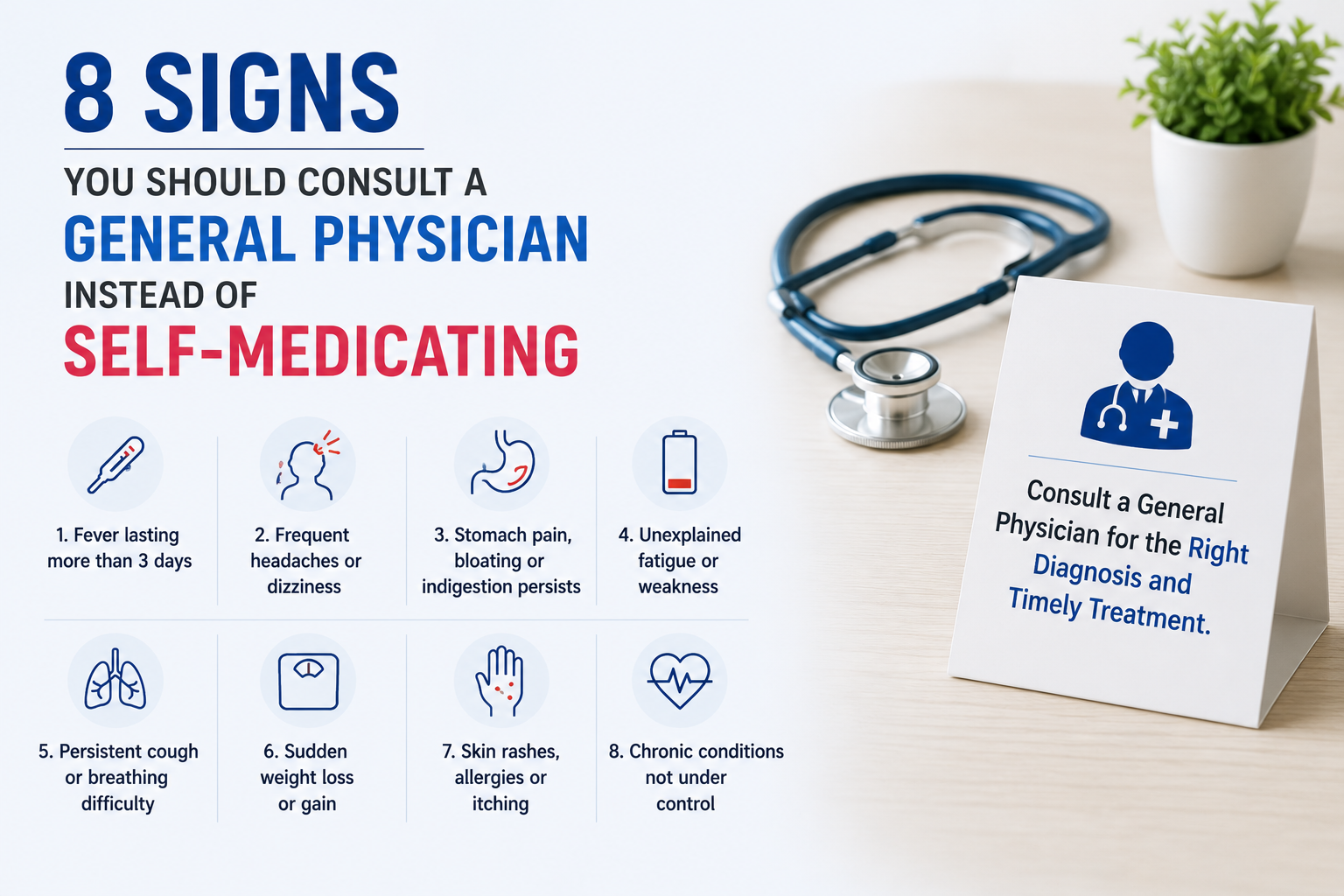
8 Signs You Should Consult a General Physician Instead of Self-Medicating
Self-medication has become increasingly common, with many people relying on over-the-counter medicines, internet advice, or recommendations from friends and family to treat common health concerns. While certain minor ailments may improve with basic home care, relying on self-medication without understanding the underlying cause can delay proper diagnosis and increase the risk of complications. A general physician is trained to evaluate a wide range of health conditions, identify the root cause of symptoms, and recommend safe and effective treatment.
Recognizing when professional medical care is necessary can protect your health and prevent minor problems from becoming serious. If you experience persistent or unusual symptoms, it is always safer to seek medical advice rather than continuing to treat yourself without a proper diagnosis.
Why Is Self-Medication Risky?
Although self-medication may seem convenient, it can mask serious illnesses, lead to incorrect treatment, cause unwanted side effects, or result in harmful drug interactions. Taking antibiotics without a prescription may contribute to antibiotic resistance, while excessive use of painkillers can affect the kidneys, liver, or stomach. A qualified general physician can accurately diagnose your condition and prescribe treatment that is appropriate for your age, medical history, and overall health.
What Are the Signs That You Should Consult a General Physician?
Certain symptoms should never be ignored because they may indicate an underlying medical condition that requires professional evaluation. The following signs suggest that it is time to consult a general physician instead of relying on self-medication.
Persistent Fever That Does Not Improve
A fever is the body’s natural response to infection, but a high temperature that lasts for more than two or three days should not be ignored. Persistent fever may indicate bacterial or viral infections, dengue, typhoid, malaria, COVID-19, or other medical conditions that require proper diagnosis and treatment. Rather than repeatedly taking fever-reducing medicines, consult a general physician to determine the underlying cause.
Continuous Cough or Difficulty Breathing
A cough that persists for several weeks or is accompanied by shortness of breath, chest discomfort, wheezing, or coughing up blood requires immediate medical attention. These symptoms may be associated with respiratory infections, asthma, pneumonia, chronic lung disease, or heart-related conditions. Early diagnosis can help prevent complications and ensure appropriate treatment.
How Can a General Physician Help?
A general physician is often the first point of contact for diagnosing and treating a wide range of illnesses. They conduct a detailed medical evaluation, recommend diagnostic tests when necessary, prescribe appropriate medications, and monitor your recovery. If specialized treatment is required, they can also refer you to the appropriate medical specialist while coordinating your overall care. Regular consultations with a general physician also support preventive healthcare through routine health screenings, vaccination advice, and management of chronic conditions such as diabetes, hypertension, and thyroid disorders.
How Can You Avoid Self-Medication?
Avoiding self-medication begins with understanding that not every symptom has the same cause. Medicines that work for one person may not be appropriate for another. Reading medication labels carefully, avoiding leftover prescription medicines, completing prescribed treatment courses, maintaining regular health checkups, and consulting a doctor whenever symptoms persist are important steps in protecting your health. Developing a trusting relationship with a general physician can also help you receive timely advice whenever health concerns arise.
Frequently Asked Questions (FAQs)
When should I consult a general physician instead of self-medicating?
You should consult a general physician if your symptoms persist for more than a few days, become severe, or keep recurring despite taking over-the-counter medications.
Is self-medication safe for common illnesses?
Self-medication may provide temporary relief for minor conditions, but prolonged or inappropriate use of medicines can delay diagnosis, cause side effects, and lead to complications.
What conditions can a general physician treat?
A general physician can diagnose and treat common illnesses such as fever, cough, infections, digestive problems, diabetes, high blood pressure, thyroid disorders, allergies, and many other medical conditions.
Why is early medical consultation important?
Early consultation allows timely diagnosis and treatment, reducing the risk of complications and improving recovery outcomes.
Can self-medication make a medical condition worse?
Yes. Incorrect medicines, wrong dosages, drug interactions, or delayed diagnosis due to self-medication can worsen certain medical conditions and make treatment more difficult.
What are the risks of self-medication? Self-medication can lead to incorrect treatment, delayed diagnosis, side effects, antibiotic resistance, drug interactions, and worsening of underlying diseases.
When should I see a general physician? You should consult a general physician if you have persistent fever, continuous cough, severe headaches, digestive issues, unexplained fatigue, chest pain, sudden weight changes, or recurring infections.
Can a general physician diagnose multiple health conditions? Yes. General physicians are trained to diagnose and manage a wide range of acute and chronic illnesses and can refer patients to specialists when necessary.
Why is self-medication not recommended? Because symptoms can have different underlying causes, self-medication may hide serious illnesses and delay appropriate treatment.
How often should I visit a general physician for a health check-up? Healthy adults should consider routine health check-ups every year or as recommended by their physician, while individuals with chronic conditions may need more frequent follow-up visits.
Yes. With the right treatment — especially laser surgery for advanced piles — most cases are resolved effectively, and maintaining good bowel habits keeps the risk of recurrence low.
Laser treatment is minimally invasive with no cuts or stitches, so pain is much less than with conventional surgery. Most patients experience only mild discomfort and recover quickly.
No. Early-stage (Grade 1–2) piles often improve with diet, lifestyle changes, and medication. Surgery is mainly recommended for larger, prolapsed, or persistent piles.
Bleeding from piles is common but should always be checked by a doctor, as similar bleeding can have other causes. Persistent or heavy bleeding needs prompt evaluation.
Most patients go home the same day and return to normal activities within a few days, with the piles shrinking over a few weeks.
Piles are swollen blood vessels, a fissure is a small tear in the anal lining, and a fistula is an abnormal tract near the anus. They share some symptoms, so a proper examination is important.
Yes, piles surgery is generally covered by most health insurance policies. Our team can help with the paperwork and cashless facilities.
Recurrence is uncommon after laser treatment, especially if you maintain a high-fibre diet, stay hydrated, and avoid straining.