Early Warning Signs of Diabetes You Shouldn't Ignore (+ Normal Blood Sugar Levels)
Diabetes has been called a “silent” disease for good reason. Over 100 million Indians are living with it today, and millions more have it without knowing — because in its early stages, the warning signs are easy to mistake for everyday tiredness, stress, or summer thirst. On average, type 2 diabetes is present for several years before it’s diagnosed, and during that time high blood sugar quietly damages the kidneys, eyes, nerves, and blood vessels. The good news is that when caught early, diabetes is very manageable — and prediabetes can often be reversed. This guide from Shreeyash Hospital walks you through the early signs to watch for and the blood sugar numbers everyone should know.
What is diabetes?
Diabetes is a condition in which the body cannot properly control the level of glucose (sugar) in the blood. This happens either because the pancreas doesn’t produce enough insulin (the hormone that moves glucose into your cells for energy), or because the body’s cells stop responding to it properly. There are three main types: Type 1, usually diagnosed young, where little or no insulin is produced; Type 2, the most common form, driven largely by insulin resistance and lifestyle; and gestational diabetes, which develops during pregnancy.
Early warning signs of diabetes
Because these symptoms come on gradually, they’re often brushed aside. Watch for:
Frequent urination, especially waking up at night to go
Increased thirst that water doesn’t seem to satisfy
Increased hunger, even after eating
Unexplained weight loss
Constant tiredness or weakness
Blurred vision
Slow-healing cuts or wounds
Frequent infections (skin, gums, or urinary)
Tingling or numbness in the hands or feet
Dark, velvety patches of skin, often around the neck or underarms
If you have several of these — particularly alongside a family history of diabetes — it’s worth getting your blood sugar checked.
Why diabetes is so easy to miss
Here’s the most important point: many people with prediabetes and early type 2 diabetes have no symptoms at all for years. This is exactly why you shouldn’t wait for symptoms to appear. A simple blood test can detect rising blood sugar long before you feel unwell — and that early window is when intervention works best.
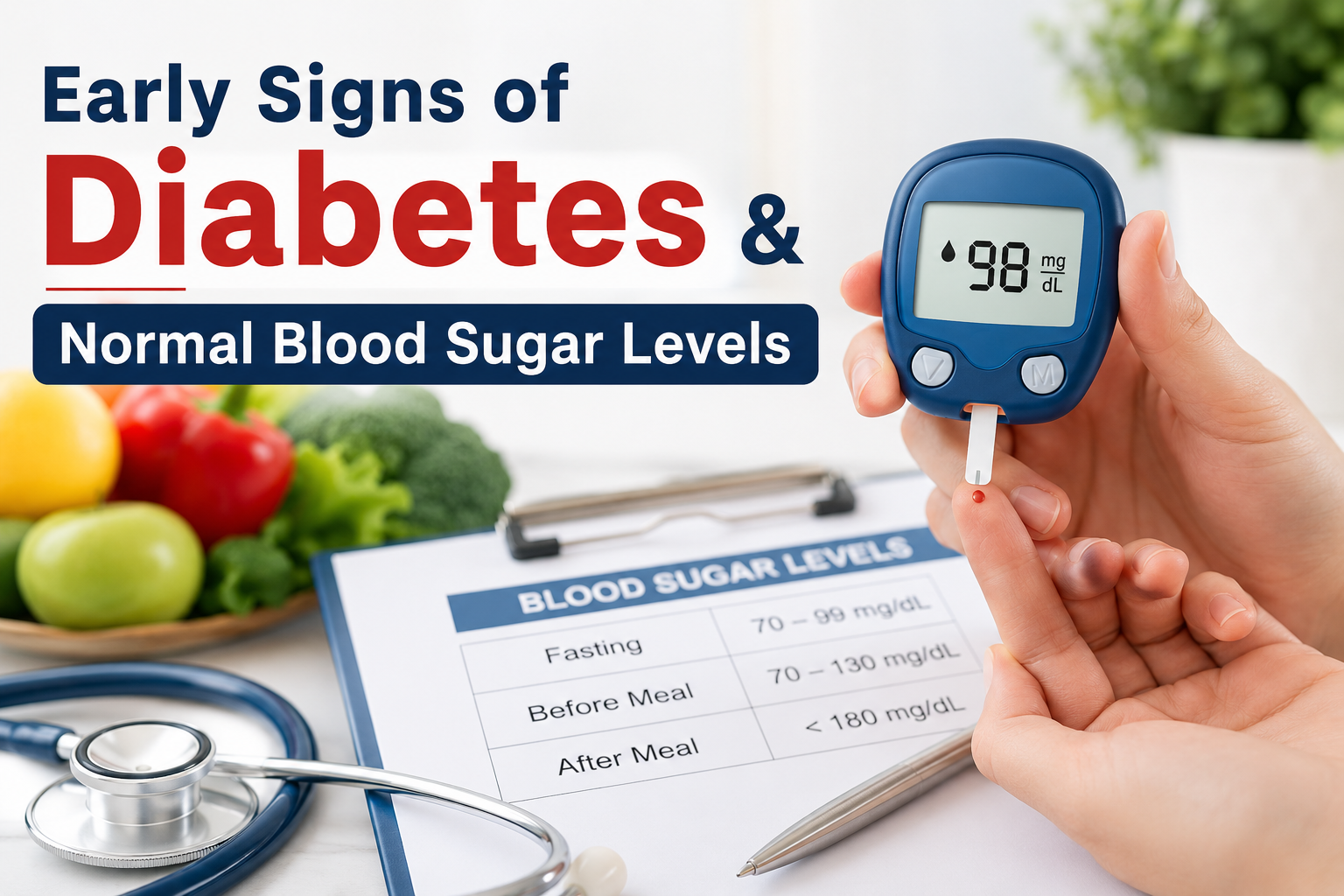
Normal blood sugar levels chart
Blood sugar in India is measured in milligrams per decilitre (mg/dL). The table below shows the standard reference ranges used by doctors:
Test
Normal
Prediabetes
Diabetes
Fasting (8+ hours, no food)
Below 100 mg/dL
100–125 mg/dL
126 mg/dL or above
Post-meal (2 hours after eating)
Below 140 mg/dL
140–199 mg/dL
200 mg/dL or above
HbA1c (3-month average)
Below 5.7%
5.7%–6.4%
6.5% or above
A few things to keep in mind: a single abnormal reading does not confirm diabetes — doctors usually look for two abnormal results on separate days, or an HbA1c of 6.5% or above. Illness, stress, and poor sleep can temporarily raise blood sugar. And once someone is diagnosed, their personal targets may differ from these diagnostic cut-offs.
What causes diabetes, and who’s at risk?
Type 2 diabetes develops from a mix of genetics and lifestyle. Key risk factors include a family history of diabetes, being overweight (especially around the abdomen), a sedentary lifestyle, a diet high in refined carbohydrates, sugar, and processed foods, high blood pressure or cholesterol, PCOS, and a history of gestational diabetes. There’s also an important point for Indians: research — including landmark work from right here in Pune — has shown that people of Indian origin tend to develop insulin resistance at lower body weights than Western populations. That means you don’t have to be significantly overweight to be at risk, and earlier screening is wise.
When should you get tested?
As a general rule, adults should have their blood sugar checked from around age 35–40, and earlier if you are overweight or have a family history. If you already have diabetes, an HbA1c test every three months helps track control.
It’s also important to recognise an emergency: very high blood sugar (above roughly 300 mg/dL) accompanied by confusion, extreme thirst, rapid breathing, or vomiting needs immediate hospital care — and our 24/7 emergency department is always available for such situations.
How is diabetes managed?
Diabetes cannot yet be cured, but it can be controlled very effectively so that you live a full, healthy life. Management rests on a few pillars: a balanced diet lower in sugar and refined carbohydrates and higher in fibre, whole grains, and lean protein; regular physical activity, such as 30 minutes of brisk walking most days; maintaining a healthy weight; taking medication as prescribed (and insulin where needed); and regular monitoring and check-ups, including periodic eye, kidney, and foot screening to catch complications early.
Preventing and reversing prediabetes
If your numbers fall in the prediabetes range, take heart — prediabetes is often reversible. Losing even a modest amount of weight, becoming more active, improving your diet, managing stress, and sleeping well can bring blood sugar back to normal and prevent — or considerably delay — the progression to type 2 diabetes. This is one of the most empowering facts in all of medicine: early action genuinely changes your future.
Comprehensive diabetes care at Shreeyash Hospital, Sinhagad Road
Shreeyash Hospital offers complete diabetes care under one roof — from blood sugar and HbA1c testing in our in-house pathology lab to structured management plans, dietary counselling, and screening for complications. With a dedicated diabetology focus (including our Shreeyash Clinic in Nanded City), we support patients across Kirkatwadi, Narhe, Dhayari, Ambegaon and the Sinhagad Road area in staying healthy for the long term.
📞 Book your consultation: +91 82377 79310 · Shreeyash Hospital, Kirkatwadi, Sinhagad Road, Pune
Frequently Asked Questions
What is the normal blood sugar level? For most adults, a fasting reading below 100 mg/dL, a post-meal reading below 140 mg/dL, and an HbA1c below 5.7% are considered normal.
What are the first signs of diabetes? Common early signs include frequent urination, increased thirst and hunger, fatigue, blurred vision, and slow-healing wounds — though many people have no symptoms at all in the early stages.
Can diabetes be cured? Diabetes cannot be permanently cured, but it can be very well managed with lifestyle changes, medication, and monitoring. Prediabetes, however, can often be reversed.
What fasting blood sugar level indicates diabetes? A fasting blood sugar of 126 mg/dL or above on two separate occasions indicates diabetes. A reading of 100–125 mg/dL suggests prediabetes.
At what age should I get tested for diabetes? Generally from age 35–40, and earlier if you are overweight or have a family history. Indians are advised to screen earlier due to higher metabolic risk.
Is prediabetes reversible? Yes. With weight loss, regular exercise, a healthier diet, and stress management, many people return their blood sugar to the normal range.
What is HbA1c and why does it matter? HbA1c reflects your average blood sugar over the past 2–3 months. It doesn’t need fasting and gives the most reliable picture of long-term control.
Can young people get type 2 diabetes? Yes. Once considered an older person’s disease, type 2 diabetes is increasingly seen in young adults in India due to lifestyle, diet, and genetic risk.
Yes. With the right treatment — especially laser surgery for advanced piles — most cases are resolved effectively, and maintaining good bowel habits keeps the risk of recurrence low.
Laser treatment is minimally invasive with no cuts or stitches, so pain is much less than with conventional surgery. Most patients experience only mild discomfort and recover quickly.
No. Early-stage (Grade 1–2) piles often improve with diet, lifestyle changes, and medication. Surgery is mainly recommended for larger, prolapsed, or persistent piles.
Bleeding from piles is common but should always be checked by a doctor, as similar bleeding can have other causes. Persistent or heavy bleeding needs prompt evaluation.
Most patients go home the same day and return to normal activities within a few days, with the piles shrinking over a few weeks.
Piles are swollen blood vessels, a fissure is a small tear in the anal lining, and a fistula is an abnormal tract near the anus. They share some symptoms, so a proper examination is important.
Yes, piles surgery is generally covered by most health insurance policies. Our team can help with the paperwork and cashless facilities.
Recurrence is uncommon after laser treatment, especially if you maintain a high-fibre diet, stay hydrated, and avoid straining.